
How to visit Espai Cràter Olot
Espai Cràter is an interactive volcanology museum in Olot, best known for putting you inside a real volcano before you head into the Garrotxa landscape. The visit is compact, hands-on, and easy to underestimate, with most people needing 1.5–2 hours inside and longer if they continue to Montsacopa. The biggest difference between a rushed visit and a good one is timing the projection moments and leaving room for the outdoor follow-up. This guide covers tickets, arrival, pacing, and what to prioritise.
Quick overview: Espai Cràter at a glance
- When to visit: From Tuesday to Sunday. Weekday mornings are usually quieter than weekends and rainy afternoons, when the museum becomes a popular indoor stop for families and groups.
- Getting in: Standard entry costs €7.50. Booking ahead is recommended during weekends, holidays, and August afternoons, though last-minute tickets are often available on quieter days.
- How long to allow: 1–2 hours for most visitors. Add extra time if you plan to walk up Montsacopa afterward.
- What most people miss: The large volcanic terrain model is best viewed from the raised platform, and the exposed crater wall is easier to appreciate once the projection finishes and the crowd moves on.
- Is a guide worth it? The self-guided visit works well for most visitors thanks to the interactive displays and audiovisual content.
💡 Pro tip: Start with the main projection room first if it’s beginning soon. Watching the audiovisual introduction early makes the rest of the exhibits much easier to follow.
Tickets for Espai Cràter can sell out on busy weekends and holiday periods. → See ticket options
Jump to what you need
🕒 Where and when to go
🗓️ How much time do you need?
🗺️ Getting around
🌋 What happens inside
♿ Facilities and accessibility
Where and when to go

How do you get to Espai Cràter?
Espai Cràter sits on the edge of central Olot at the foot of Montsacopa, around 1km from Plaça Major and about 1.2km from Olot bus station.
Address: Carrer Macarnau, 55, 17800 Olot, Girona, Spain | Find on Google Maps
- On foot: Olot town center → 10–15 min walk → a gentle uphill approach with clear signs for Espai Cràter.
- Bus: Estació d’Olot → 15–20 min walk → easiest public-transport arrival if you’re coming from Girona or Barcelona.
- Taxi: Olot bus station → 5 min ride → the simplest option if you’re carrying bags or traveling with children.
- Car: Free street parking nearby → short walk → useful if you’re combining the museum with Santa Margarida, Croscat, or La Fageda d’en Jordà.

Getting here from nearby cities
Espai Cràter works well as a regional day trip, especially from Girona or Barcelona if you’re pairing the museum with Garrotxa’s outdoor volcano trails.
From Girona
- Distance: 50km
- Travel time: About 1 hour by car or about 1 hr 15 min by direct bus
- Time to budget: Leaves enough time for the museum, Montsacopa, and a relaxed lunch in Olot on the same day
From Barcelona
- Distance: 120km
- Travel time: About 1 hr 30 min by car or about 2 hr 15 min by coach bus
- Time to budget: Best treated as a full-day trip if you want Espai Cràter with one outdoor volcanic stop

Which entrance should you use?
There is one main entrance at street level on Carrer Macarnau. Timed entry is used, so arriving on time is recommended, especially on busy days.
- Main entrance: Usually little to no wait on weekdays; weekends and holidays can mean short queues.
When is Espai Cràter open?
- Tuesday–Sunday: Open daily with timed-entry slots through the day
- Monday: Closed, except selected Mondays in August
- Friday: 4pm–8pm runs as quiet hours with reduced sound and lighting
- Last entry: 45 min before closing
When is it busiest? Weekends, school holidays, and rainy afternoons are usually the busiest periods.
Pro tip: Visit early in the day if you want clearer views of the projection spaces and shorter waits at the interactive stations.
How much time do you need?
| Visit type | Route | Duration | Walking distance | What you get |
|---|---|---|---|---|
Highlights only | Entrance → projection space → main interactive exhibits → crater wall → exit | 45–60 mins | Walking distance | Main audiovisual show and core volcanic exhibits |
Balanced visit | Entrance → full exhibition route → interactive zones → crater wall → viewpoint areas → exit | 1–2 hrs | ~0.8 km | Interactive displays, terrain model, and crater wall |
Full exploration | Full museum visit → revisit projection spaces → Montsacopa walk afterward | 2.5+ hrs | ~2–3 km combined | Complete museum visit with volcano viewpoints |
How do you get around Espai Cràter?
Layout and route
Espai Cràter is compact and mostly linear, with the exhibits arranged around a central projection and exhibition space. It’s easy to self-navigate, though timing the projection moments can improve the flow of your visit.
Entrance and introduction: Check-in area and opening audiovisual experience → spend 10–15 mins
- Central exhibition hall: Terrain model, crater wall, and main projection spaces → spend 25–35 mins
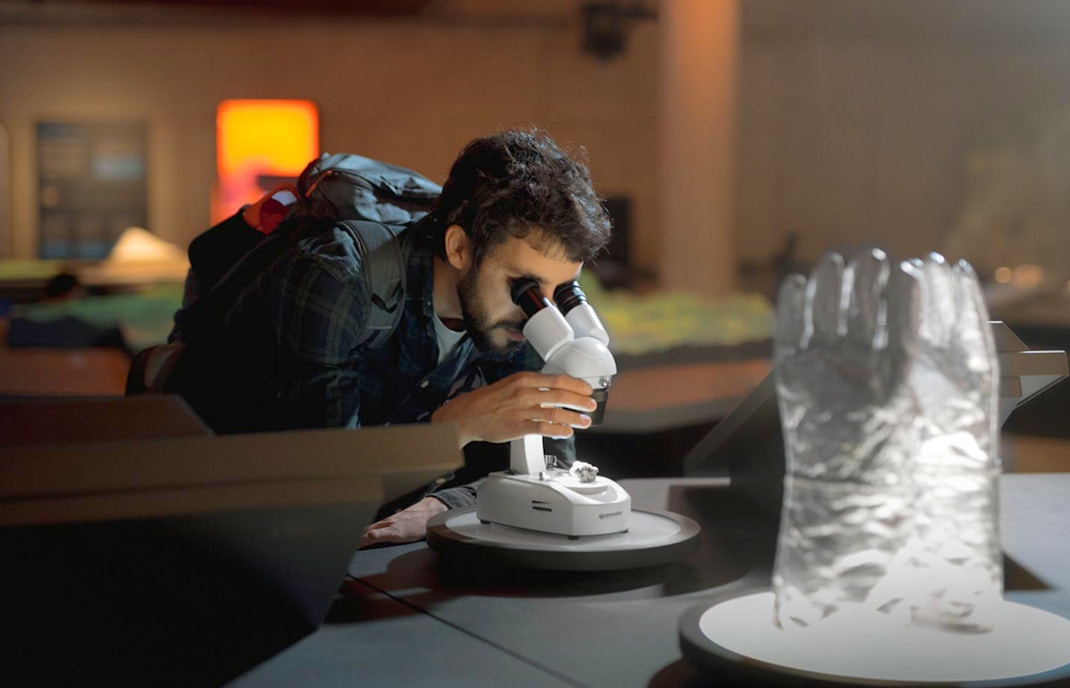
- Interactive exhibits: Volcanic formations, eruptions, rocks, and monitoring systems → spend 30–40 mins
- Interactive and VR experiences: Hands-on displays and Cràter 360º experience → spend 10–20 mins depending on queues
Suggested route: Start with the opening audiovisual experience, continue through the central hall and crater wall, then finish with the interactive and VR exhibits.

Maps and navigation tools
- Map and signage: Clear wayfinding throughout the museum makes the route easy to follow.
- Audio support: Content is available in Catalan, Spanish, English, and French.
- Digital support: Interactive displays provide enough structure for most self-guided visits.
💡 Pro tip: View the large terrain model from both ground level and the raised viewing area, where the elevated angle makes the volcanic landscape much easier to understand.
What happens inside Espai Cràter?
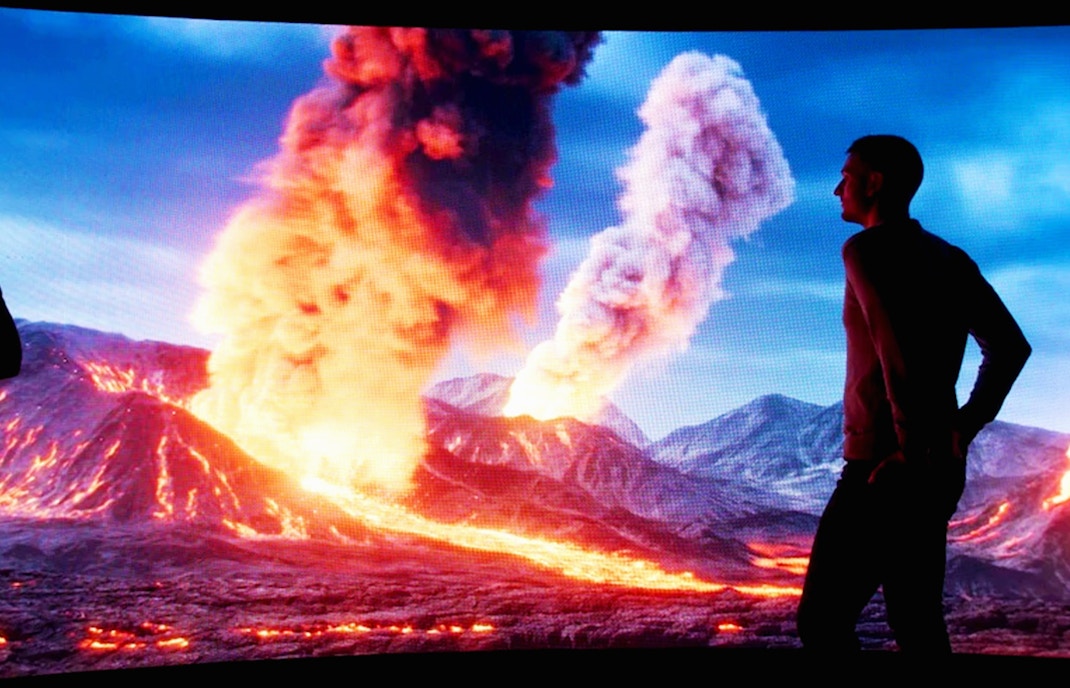
Immersive ‘inside the volcano’ intro
Experience type: Introductory audiovisual experience
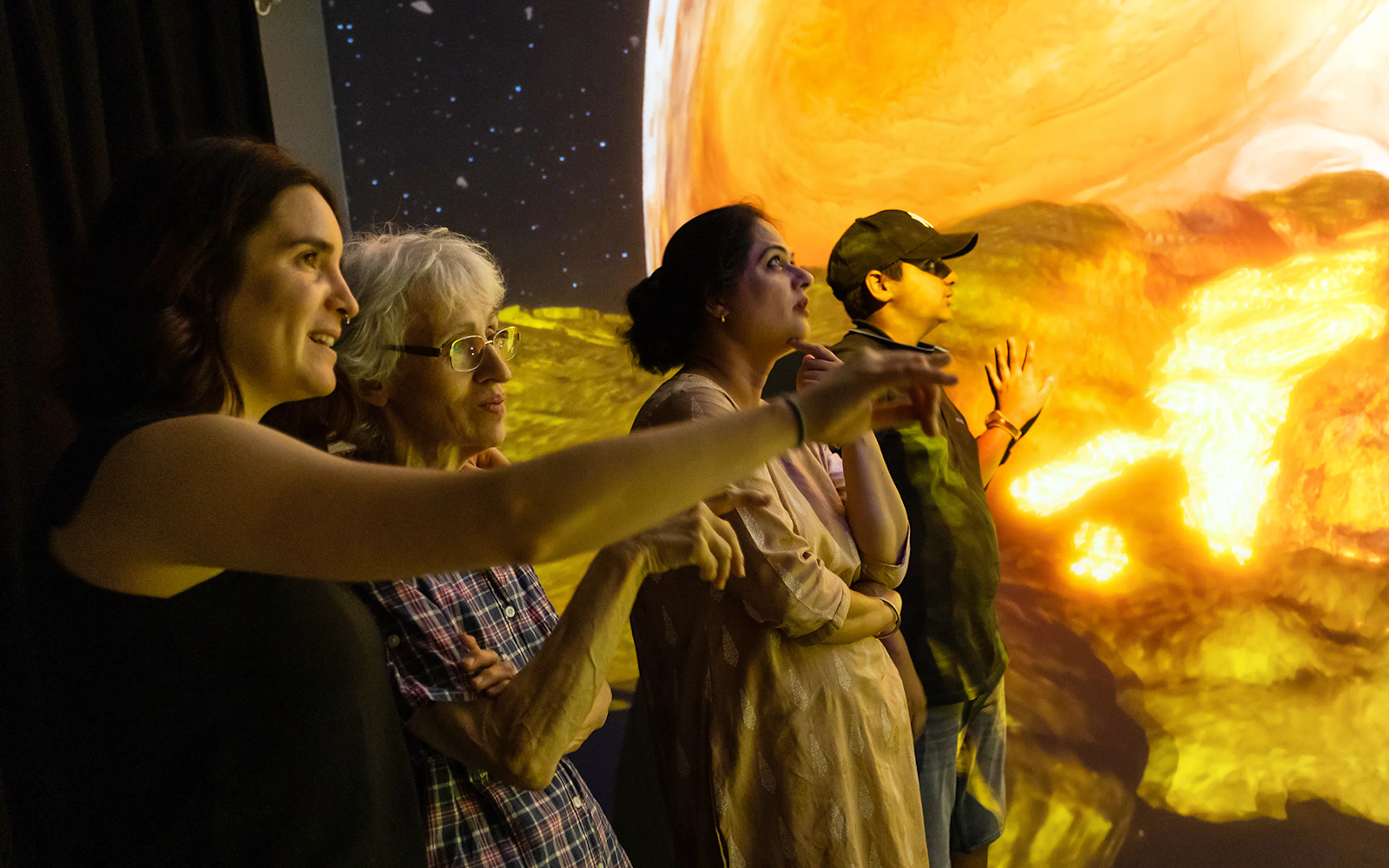
This opening sequence sets the tone for the visit. You enter a darkened space and watch a short film introducing Garrotxa’s volcanic landscape before reaching the main exhibition hall. The sound and floor vibrations are part of the experience, so standing near the center gives the best effect.
Where to find it: Immediately after check-in, before the main exhibition hall
Giant 3D terrain model
Experience type: Videomapped geological model
The large terrain model of the Garrotxa region is one of the museum’s standout exhibits. Projection mapping shows how the volcanic landscape formed over time, making it much easier to understand the region before exploring outside.
Where to find it: At the center of the main hall
Pro tip: The raised viewing area gives a much clearer perspective than the front edge.
Exposed crater wall
Experience type: Real volcanic rock display
Part of the museum is built directly against the volcanic rock of Puig del Roser, giving visitors a close look at real volcanic layers and textures. Projection effects explain how the volcano formed directly onto the rock face.
Where to find it: Beside the central exhibition area
Thematic science stations
Experience type: Interactive learning exhibits
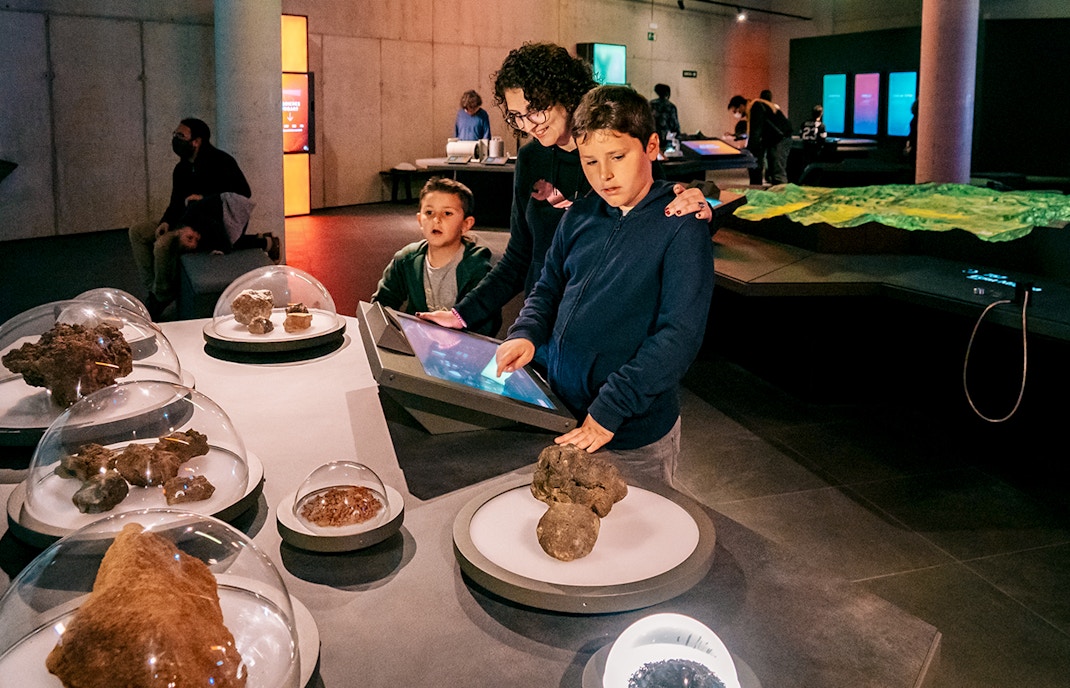
These exhibits cover eruption types, volcanic materials, lava flows, and monitoring systems through interactive displays and short explainers. The layout is easy to explore at your own pace without following a strict route.
Where to find it: Around the main exhibition hall
Seismic jump test and hands-on experiments
Experience type: Interactive science activities
This section is especially popular with families and younger visitors. You can test simulated quake activity, examine volcanic rocks, and try hands-on experiments that make the science feel more practical and engaging.
Where to find it: Within the interactive exhibit areas
Cràter 360º VR experience
Experience type: Virtual reality volcano experience
The VR experience explores volcanic environments beyond Garrotxa and adds a more immersive layer to the visit. It is a fun extra, though most visitors spend more time in the main exhibition spaces.
Where to find it: Inside the main exhibition hall
Pro tip: Try the VR experience earlier in your visit to avoid queues later in the day.
Facilities and accessibility
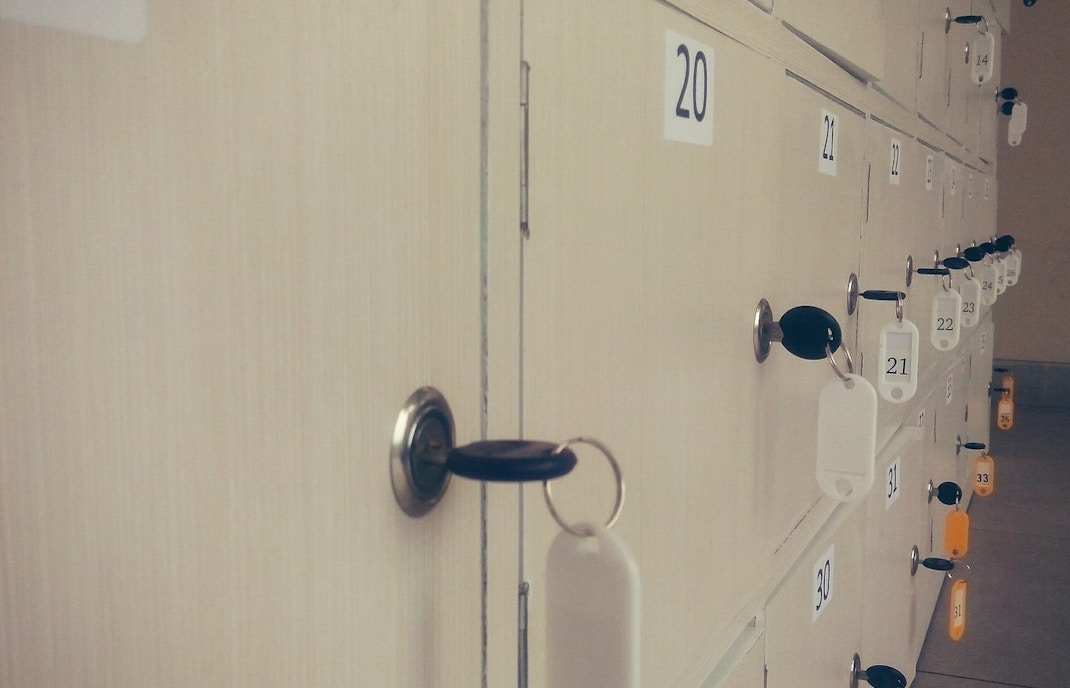
- 🎒 Lockers: Lockers near the entrance help if you’re carrying a day bag or folding stroller before heading up Montsacopa.
- 🌍 Languages: Exhibit content is available in Catalan, Spanish, English, and French, which makes self-guided visits much easier for international travelers.
- 🎧 Audio guide: A multilingual web-based guide is included, so you can add structure without paying extra for a guided tour.
- 🛍️ Gift shop: A small shop near the exit sells volcano-themed souvenirs, books, and science-focused items rather than generic museum merchandise.
- 🍽️ Food: There’s no on-site café, so eat before your slot or plan a meal in central Olot after the visit.
- 🔇 Quiet hours: Friday 4pm–8pm runs with reduced sound and lighting, which is useful if you want a calmer visit than the usual family peak.
- ♿ Mobility: The museum is step-free and accessible, with elevators and ramps throughout the main route.
- 👁️ Visual impairments: Some tactile and interactive elements are included for the experience.
- 🦻 Hearing support: Assisted listening support is available for parts of the audiovisual experience.
- 🧠 Cognitive and sensory needs: Friday quiet hours lower sound and lighting levels, and that is the best regular slot if the standard projection effects feel too intense.
- 👨👩👧 Families and strollers: The route is stroller-friendly through the building, and the compact layout means you don’t need to budget for long detours or stair-heavy sections.
Espai Cràter works especially well for children because the science is built around movement, touch, projection, and short bursts of interaction rather than long reading stretches.
- 🕐 Time: Around 1–1.5 hours works well for families focusing on the projection spaces, terrain model, and interactive exhibits.
- 🏠 Facilities: Lockers, elevators, and stroller-friendly routes make family visits straightforward.
- 💡 Engagement: The seismic and hands-on exhibits are good midway through the visit when children need a more active break.
🎒 Logistics: Earlier time slots are usually quieter and work better for younger children or visitors sensitive to noise.
📍 After your visit: Montsacopa is the easiest add-on since the walking route begins close to the museum entrance.
Rules and restrictions
What you need to know before you go
- Entry requirement: Timed-entry tickets are standard, and arriving at your slot matters more than it would at a large free-flow museum.
- Bag policy: Use the lockers for bulkier bags and strollers so you can move easily through the compact exhibition space.
- Dress note: There’s no dress code, but closed shoes help if you plan to continue straight onto Montsacopa’s dirt path afterward.
Not allowed
- 🚫 Food and drink: Finish snacks and open drinks before you enter the exhibition area, then eat afterward in central Olot.
- 🚬 Smoking and vaping: Smoking and vaping are only permitted outside the museum.
- 🐾 Pets: Pets are not allowed inside, except registered assistance animals.
- 🖐️ Handling exhibits: Touch the hands-on stations and rock samples, but don’t climb on installations or lean onto projection surfaces.

Photography
Photography is allowed throughout most of the museum, especially around the terrain model and crater-wall displays. Flash photography is best avoided in darker projection spaces to avoid disrupting the experience for other visitors.
Good to know
- 💡 Projection timing: The main audiovisual displays run in cycles, so arriving on time helps you experience the exhibits in sequence without waiting for the next loop.
- 🔇 Quiet hours: Friday afternoons offer reduced sound and lighting levels for a calmer visit.
Practical tips
- Booking and arrival: Same-day booking is often possible, but weekends, holidays, and August afternoons are the busiest times.
- Timed entry: Arriving 10–15 mins early helps if you want to catch the opening audiovisual experience from the start.
- Pacing: Focus on the terrain model, crater wall, and interactive exhibits rather than trying to read every panel.
- Crowd management: Weekday mornings are usually the quietest, especially around the VR and hands-on exhibits.
- What to bring: Pack light if you plan to continue to Montsacopa afterward.
- Food and drink: There is no café inside the museum, so plan meals before or after your visit in Olot.
- Family pacing: Starting with the audiovisual spaces and finishing with the hands-on exhibits usually works best for younger visitors.
- Outdoor follow-up: Bring a light layer if you’re heading up Montsacopa after the museum visit.
What else is worth visiting nearby?
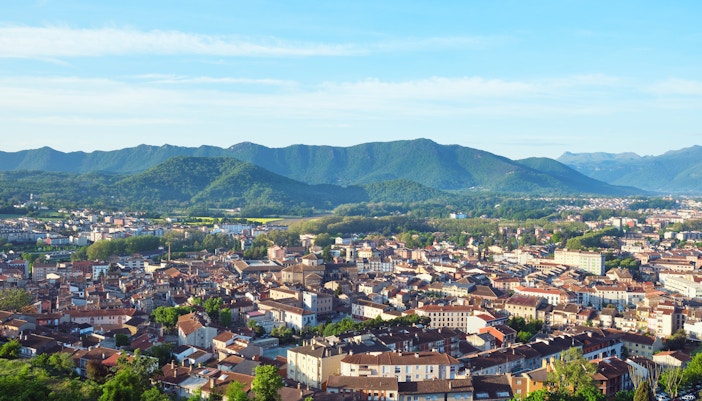
Commonly Paired: Montsacopa Volcano
- Distance: 400m — 10 min walk
- Why people combine them: The walking route starts near the museum and gives you a chance to see a real volcanic crater after the indoor exhibits.
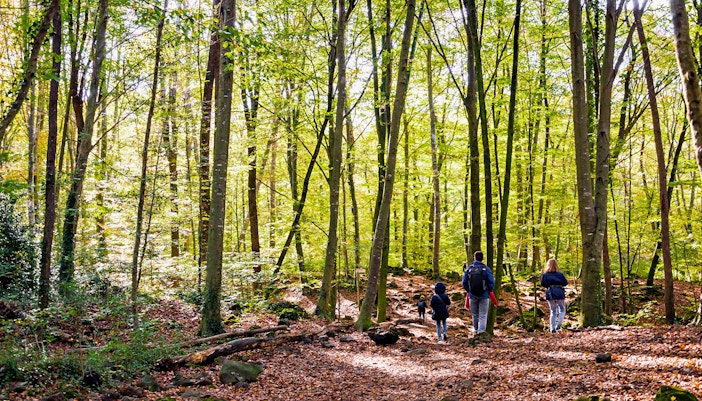
Commonly Paired: La Fageda d’en Jordà
- Distance: 6km — 15 min drive
- Why people combine them: This protected beech forest sits on old lava flows and pairs well with the museum’s geology focus.
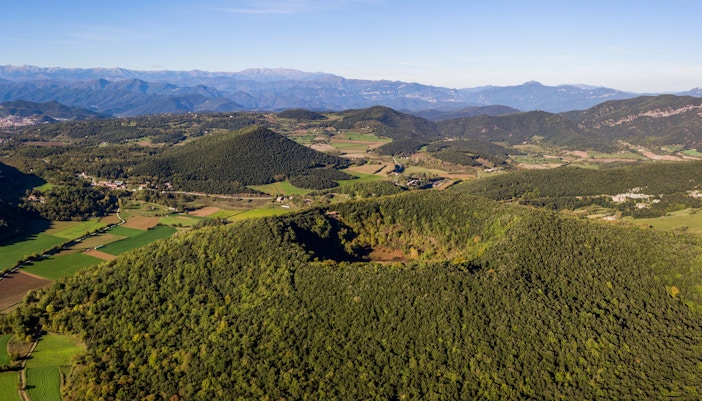
Also Nearby
Santa Margarida Volcano
- Distance: 10km — 20 min drive
- Worth knowing: Known for its large grassy crater with a chapel at the center.
Olot old town
- Distance: 1km — 10–15 min walk
- Worth knowing: A good stop for lunch, cafés, and a slower finish to the day after the museum visit.
Eat, shop and stay near Espai Cràter
- On-site: There’s no café or restaurant inside Espai Cràter, so most visitors eat in central Olot before or after their visit.
- Cafè Art Fontanella (12-min walk, Plaça Major): Good for coffee, pastries, and a quick breakfast.
- La Quinta Justa (15-min walk, Passeig d’en Blay): Popular for traditional Catalan lunch dishes.
- Restaurant La Deu (8-min drive, Paratge de la Deu): Known for local specialties and patates d’Olot.
Pro tip: Visiting the museum before lunch usually works better, especially on busy weekends when central Olot restaurants fill up later in the day.
- Espai Cràter gift shop: Small selection of volcano-themed books, educational items, and souvenirs near the exit.
- Mercat d’Olot area: Better for local produce, edible souvenirs, and Garrotxa specialty foods.
- Town-center shops: Useful for trail maps and outdoor gear before visiting nearby volcano routes.
Olot is a practical, walkable base for exploring Garrotxa and works well for a 1–2 night stay.
- Price point: Generally more moderate than Girona, with rural stays becoming more upscale outside town.
- Best for: Nature-focused trips with easy access to volcanoes and hiking routes.
- Consider instead: Stay in Girona for more restaurants and transport connections, or near Santa Pau for a quieter countryside setting closer to the trails.
Frequently asked questions about visiting Espai Cràter
Most visitors spend 1–2 hours inside the museum. Add extra time if you plan to visit Montsacopa afterward.
Advance booking at Espai Cràter is recommended on weekends, holidays, and during summer afternoons, though same-day tickets are often available on quieter days.
Arriving 10–15 mins early gives you enough time to check in and start with the opening audiovisual experience.
Yes, photography is allowed. Flash is best avoided in projection spaces.
Yes. The mix of projections, interactive exhibits, and hands-on activities works well for children and teens.
Yes. Espai Cràter is step-free, with ramps and elevators throughout the main route.
There’s no café inside the museum, but central Olot has plenty of nearby restaurants and cafés. Free street parking is usually available close to the museum.
Yes. Exhibition content is available in Catalan, Spanish, English, and French.